South Louisiana lawn disease service
Lawn fungus control built for South Louisiana.
Brown rings, yellow turf, leaf spots, and thinning can point to disease—but they can also come from insects, drought, irrigation, mowing, or root stress. Grow Green evaluates the clues first, then recommends targeted treatment only when it fits.
Fungicide can help manage susceptible disease and protect living turf. It cannot turn dead leaf, crown, or root tissue green again.
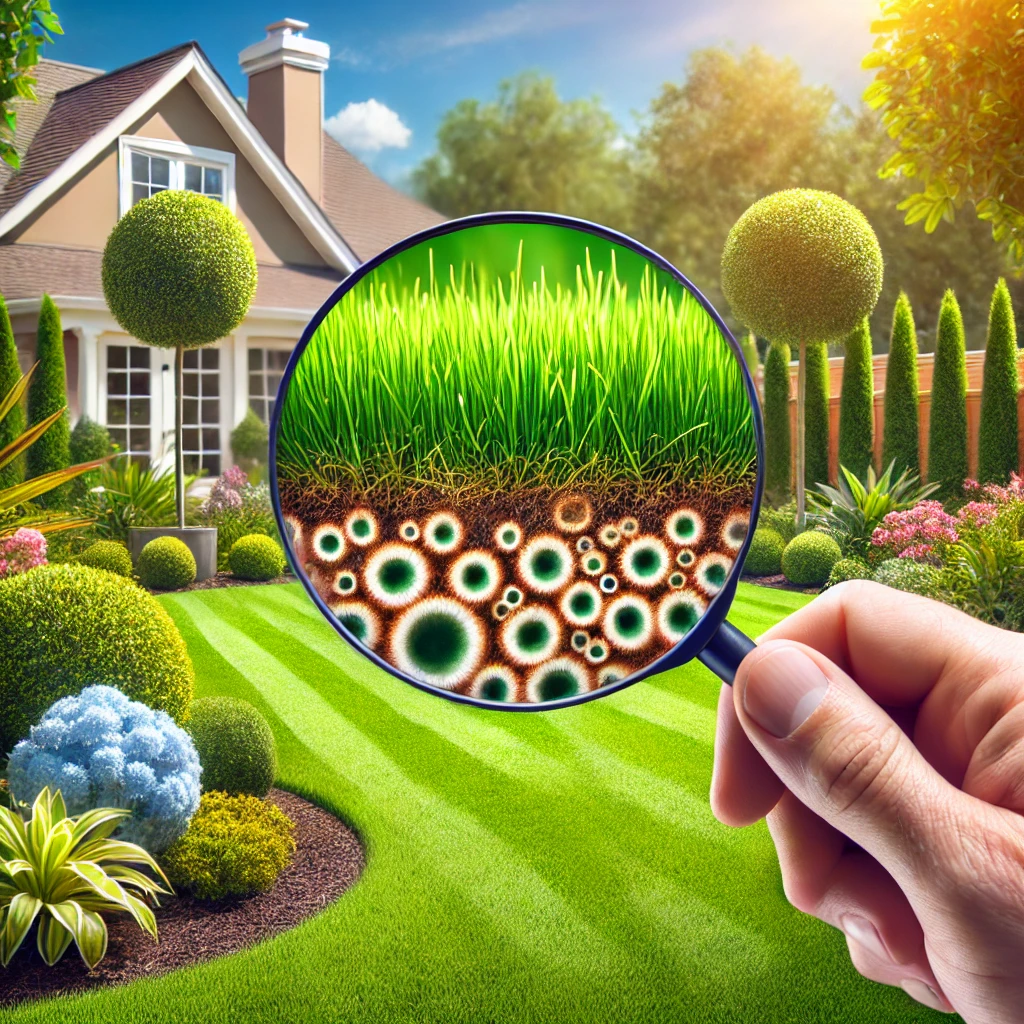 Illustration for symptom awareness—not a diagnosis

Diagnosis before treatment
Brown grass is a symptom. Fungus is one possible cause.
A useful recommendation comes from the whole picture—not one photo or one ring in the lawn. We look at the pattern, grass species, affected plant parts, weather, moisture, maintenance, and how quickly the problem changed.
- Pattern in the lawnLarge rings, scattered straw-colored spots, irregular thinning, or rapid decline provide different clues.
- Leaves, stolons, crowns, and rootsSurface spots and weak root systems can call for very different expectations and management.
- Conditions around the turfTemperature, humidity, leaf-wetness duration, shade, drainage, fertility, and mowing all matter.
Common local possibilities
Four lawn diseases worth knowing.
These are field clues—not a remote diagnosis. Similar symptoms can overlap, and turf may have more than one stress at a time.
Large Patch
Often associated with warm-season turf during cooler, wet transition periods. The active edge can be more useful than the dead-looking center.
- Large circular or irregular yellow-to-brown patches that may expand
- An orange or bronze margin may appear where disease is active
- Common concern in St. Augustine, centipede, and zoysia lawns
Gray Leaf Spot
A foliage disease seen most often on St. Augustine in Louisiana, particularly when heat, humidity, and prolonged leaf wetness line up.
- Small brown lesions that expand along the leaf blade
- Tan or gray centers with darker brown-to-purple margins
- Severe pressure can make turf look scorched or thin
Dollar Spot
A leaf disease that can create scattered straw-colored spots. Individual spots can merge into larger damaged areas as pressure increases.
- Small bleached or straw-colored spots across the lawn
- Light tan leaf lesions with darker brown borders
- Commonly reported on bermudagrass in Louisiana
Take-All Root Rot
A soil-borne root disease. Aboveground decline may become most obvious after roots are already damaged and heat or drought adds stress.
- Yellow, thin, drought-stressed appearance that persists
- Short, dark, brittle roots and low root density
- Integrated stress management matters; established cases can be difficult
A photo can help show the pattern, but it may not show the leaf lesions, crowns, roots, soil moisture, insects, or maintenance conditions needed to narrow the cause.
Common look-alikes
When fungicide is not the first answer.
Using a disease product on the wrong problem costs time while the actual cause keeps working. These issues can closely resemble lawn fungus.
Explore lawn insect controlChinch bugs & other insects
Feeding injury can create spreading yellow or brown areas, especially during hot weather. Turf and pest inspection help separate it from disease.
Drought or irrigation gaps
Missed zones, clogged heads, poor coverage, and water stress can make sharp or irregular brown patterns that track the irrigation system.
Mowing injury
Scalping, dull blades, cutting wet turf, or removing too much at once can leave discoloration and wounds that resemble or contribute to disease.
Compaction, drainage & shade
Restricted roots, saturated soil, runoff, and low light weaken turf. These conditions may be the primary problem or increase disease pressure.
Real lawn. Real conversation.
See what widespread patch damage can look like.
This two-minute walkthrough shows severe circular damage on an actual customer lawn. It is a useful visual example—not proof that every similar patch has the same cause. The closer look, recent conditions, and turf history still matter.
- Full square frame with no social-media crop
- Actual South Louisiana property conditions
- A clear reason to act before living turf is lost
Our treatment process
A plan built around the cause—not the color.
Disease management works best when product choice, timing, turf condition, and maintenance guidance all point in the same direction.
Tell us what changed
Share the grass type, pattern, timing, weather, watering, and anything already applied. Photos may help us decide what needs a closer look.
Narrow the likely cause
We compare disease clues with insects, irrigation gaps, mowing injury, root stress, compaction, and other common look-alikes.
Choose the right response
When a susceptible disease is the best fit, we select a labeled fungicide strategy. When it is not, we explain the better next step.
Protect the recovery
You receive practical watering, mowing, and stress-reduction guidance. Follow-up depends on the disease, severity, weather, and turf response.
Clear expectations
What treatment can—and cannot—do.
Disease activity and visual recovery are not the same thing. New healthy growth may need time to replace damaged tissue.
Treatment may help
- Manage active pressure from a susceptible fungal disease
- Protect living turf while favorable disease conditions continue
- Reduce recurrence risk when paired with better turf-care conditions
- Give surviving turf a better opportunity to recover and fill
Treatment cannot
- Revive grass whose leaves, crowns, stolons, or roots are already dead
- Repair irrigation coverage, drainage, compaction, shade, or mowing problems
- Guarantee a cosmetic recovery date regardless of season and severity
- Replace laboratory or specialist testing when the diagnosis remains uncertain
Make the lawn less inviting to disease
The application is only one part of the plan.
Small maintenance changes can shorten leaf wetness, reduce plant stress, and support stronger roots. Recommendations should still match your turf type and site.
Water with purpose
Favor early-morning irrigation and avoid frequent cycles that keep leaves wet for long periods. Check coverage instead of assuming every zone is equal.
Mow for the grass
Use the appropriate height and a sharp blade. Avoid scalping and, when practical, avoid mowing actively diseased turf while it is wet.
Reduce root stress
Compaction, thatch, poor drainage, and shade can weaken turf or extend wetness. These site limits need management even when fungicide is justified.
Use balanced fertility
Too much or poorly timed quick-release nitrogen can increase pressure for some diseases. Base pH changes such as lime on a soil test—not a guess.
Disease and maintenance guidance informed by LSU AgCenter turfgrass disease resources and University of Georgia Extension disease guidance. Product selection and directions always follow the current label.
Where fungus control fits
Routine prevention and active outbreaks are different jobs.
Grow Green’s main lawn program includes eight planned visits per year, generally about six weeks apart. Seasonal disease attention may be built into the plan where included, while active, severe, repeated, or specialized disease work may require a separately priced treatment strategy.

A genuinely local company
Local experience matters when weather drives the problem.
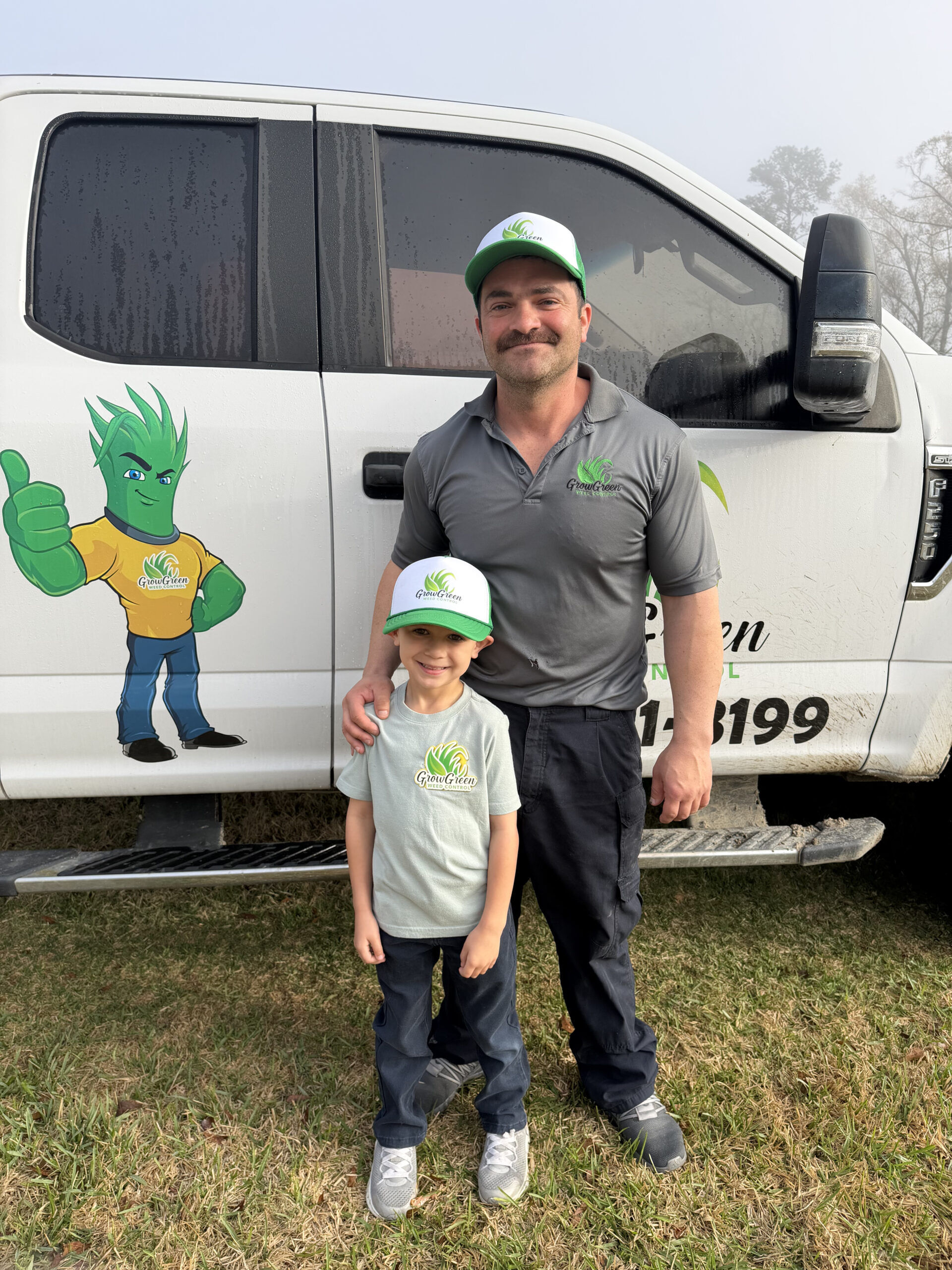
Grow Green was built in South Louisiana by owner and firefighter Dereck Palermo. Our team works in the same heat, humidity, heavy rain, and seasonal transitions that shape disease pressure across area lawns.
We serve Baton Rouge and communities across Ascension and Livingston parishes, including St. Amant, Prairieville, Gonzales, Geismar, Dutchtown, Sorrento, Denham Springs, Walker, Central, and Zachary.
Free custom estimate
Show us what your lawn is doing.
You do not need to name the disease. Choose the closest description, share the address, and our local team will review the next step.
- No pressure or obligation
- Most quote requests reviewed within one business day, Monday–Friday
- Your information goes directly to Grow Green
Thanks—your request is in.
The Grow Green team will review your lawn details and contact you about the next step. Most quote requests are reviewed within one business day, Monday through Friday.
Common questions
Straight answers about lawn fungus.
Good disease control starts with realistic expectations. If your question is not here, call our local team at (225) 461-3199.
How do I know whether a brown patch is actually fungus?
You usually cannot confirm the cause from color alone. Pattern, turf species, leaf or root symptoms, moisture, weather, mowing, irrigation, and insect evidence all help. Photos may narrow the possibilities, but an on-site look or additional testing can be appropriate when the clues conflict.
Will fungicide make dead grass green again?
No. Fungicide may manage susceptible disease and protect living tissue, but it does not revive dead leaves, crowns, stolons, or roots. Visual recovery depends on how much viable turf remains, the grass species, growing conditions, season, and whether re-sodding or repair is needed.
How quickly should I expect improvement?
There is no responsible one-size-fits-all timetable. Disease suppression, new turf growth, and full cosmetic recovery happen on different schedules. The pathogen, product, severity, weather, turf health, and whether the underlying stress is corrected all affect progress.
Is preventive treatment different from treating an outbreak?
Yes. Preventive timing aims to protect susceptible turf before or near a predictable disease window. An active outbreak may need a different product, timing, repeat interval, and recovery plan. The current product label and actual disease pressure guide the recommendation.
Is fungus control included in the regular lawn program?
Grow Green’s main lawn program includes eight planned visits per year, generally about six weeks apart. Seasonal disease attention may be included as described in your specific plan. Active, severe, repeated, or specialized fungicide treatments may be priced separately; we review that scope with you first.
Should I water or mow after a fungicide application?
Follow the instructions Grow Green leaves for that application. Some products need time on the foliage, while others may need to be watered into the root zone. Mowing and irrigation timing can vary by product and disease, so the current label controls.
When can children and pets return to the lawn?
Keep people and pets out of the treatment area during application and until the product label’s re-entry directions have been satisfied. This often includes allowing the treated surface to dry, but instructions can vary. Grow Green will provide the applicable guidance for your service.
Why is Take-All Root Rot harder to manage?
It damages roots below the surface, and aboveground symptoms may show after root loss is already advanced. Reducing drought, compaction, drainage, mowing, thatch, or pH stress is central to management. Fungicide may be one part of an integrated plan, but established cases can respond less predictably.
What areas do you serve?
Grow Green serves Baton Rouge and communities across Ascension and Livingston parishes, including St. Amant, Prairieville, Gonzales, Geismar, Dutchtown, Sorrento, Denham Springs, Walker, Central, and Zachary. Submit the service address and our team will confirm coverage.
Do not let a guess choose the treatment.
Tell Grow Green what you are seeing. We will help separate likely disease from common look-alikes and build a clear lawn-specific recommendation.