
White, cottony insects on a crepe myrtle trunk are easy to miss until sticky leaves, ants, or black sooty mold show up. In the Burbank area of Baton Rouge, our team found woolly aphids on a crepe myrtle, treated them through our tree and shrub program, and watched the tree improve as the pest pressure dropped. The black sooty mold did not vanish overnight — it faded over time once the honeydew from the aphids stopped.
If your crepe myrtle looks dusty with white fuzz, sticky to the touch, or coated in black film on the bark, this guide explains what you are seeing and why a scheduled ornamental program helps more than a one-time guess spray.
What Woolly Aphids Are
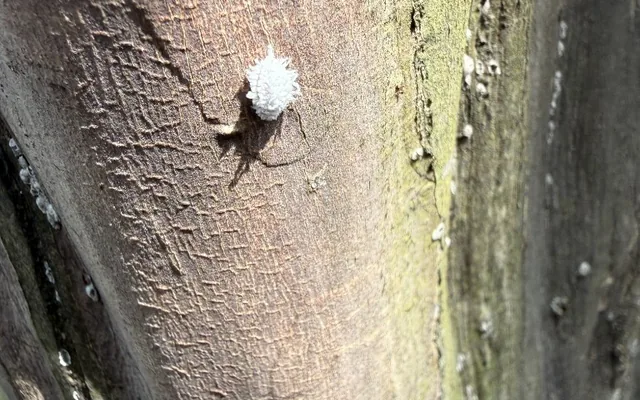
Woolly aphids are soft-bodied insects covered in white, waxy filaments that look like tiny bits of cotton or wool. On crepe myrtles (also spelled crape myrtles), they often collect along bark cracks, branch crotches, and tender new growth.

They feed by piercing plant tissue and sucking sap. A light population may be easy to overlook. Heavier feeding can stress tender growth, leave a sticky residue called honeydew, and invite secondary problems that make the tree look worse than the insects alone.
Common clues homeowners notice first:
- White fuzzy spots on bark, twigs, or new shoots that smear or look cottony up close
- Sticky leaves, patio furniture, or cars parked under the canopy from honeydew drip
- Ants climbing the trunk as they farm or feed on the honeydew
- Black film on bark or leaves — sooty mold growing on that honeydew
Why Black Sooty Mold Shows Up
Black sooty mold is not a disease that “attacks” the crepe myrtle the way a leaf-spot fungus does. It is a superficial fungus that grows on honeydew — the sugary waste aphids leave behind. When woolly aphids are active, honeydew coats bark and foliage, and sooty mold can build into a thick, charcoal-looking crust.

That black coating can make a tree look severely damaged even when the wood underneath is still alive. Washing the mold without stopping the aphids usually brings it back, because the honeydew food source is still there.
The practical order of operations:
- Identify and reduce the aphids (the root cause of the honeydew)
- Support plant vigor with seasonal monitoring and nutrition when appropriate
- Allow sooty mold to weather and flake away as the honeydew stops — improvement is gradual, not instant paint removal
What We Saw on This Burbank Crepe Myrtle
On this property in the Burbank area of Baton Rouge, woolly aphids were visible on the bark along with heavy sooty mold in places. The tree still showed new growth, but the trunk and branches carried the classic “white fuzz + black film” combination that points back to aphids rather than a mystery bark disease.
We treated the aphids as part of our tree and shrub program — scheduled ornamental visits that combine monitoring with targeted pest and disease management and plant nutrition when the landscape needs it. As aphid pressure dropped, honeydew production slowed, and the black sooty mold diminished over time instead of needing to be scrubbed as the main fix.
How Our Tree and Shrub Treatment Approach Helps
Crepe myrtles in South Louisiana face recurring ornamental pests during the growing season. A one-time spray can knock numbers down, but woolly aphids and similar soft-bodied pests often rebound if nobody is watching the plant through the season.
Our six-visit tree and shrub care program is built for that pattern:
- Inspection first: confirm aphids versus look-alikes such as scale, mealybugs, or leftover waxy residue
- Targeted treatment when it fits: address active pest pressure on susceptible ornamentals rather than spraying every plant the same way every round
- Seasonal follow-up: return visits catch rebounds before honeydew and sooty mold rebuild
- Plant nutrition support: healthier trees and shrubs handle stress better when timing and products fit the landscape
- Honest limits: drainage problems, root damage, and poor planting sites may need more than product — we say so when that is the case
For sticky leaves, sooty mold, or unclear ornamental symptoms, our plant disease or pest page is also a useful starting point before you assume the wrong cause.
What Improvement Looked Like After Treatment
After the aphids were brought under control, the crepe myrtle’s canopy looked fuller and cleaner, and the bark no longer carried the same heavy sooty-mold coating. That recovery tracks with the biology: stop the honeydew, and sooty mold gradually loses its food source.

Results vary by infestation level, weather, plant condition, and how quickly follow-up visits catch any rebound. Sooty mold fade is often one of the last visual changes homeowners notice — patience after the root cause is handled is normal.
What Homeowners in Baton Rouge Can Do Next
- Look closely at white fuzz: cottony spots on crepe myrtle bark or new growth deserve a closer look, especially with sticky leaves or ants
- Treat sooty mold as a clue: black film usually means a honeydew-producing insect is (or recently was) active
- Avoid random product shopping by symptom alone: the right approach depends on the pest, plant, and timing
- Plan for follow-up: ornamental pests in our climate rarely stay solved after a single visit
If you are seeing woolly aphids, sticky honeydew, or black sooty mold on crepe myrtles or other ornamentals around Baton Rouge, Ascension, Livingston, or nearby areas we serve, call (225) 461-3199 or request a free estimate for tree and shrub care.
FAQs: Woolly Aphids and Crepe Myrtles
Are woolly aphids the same as white fungus on the trunk?
No. The white, cottony look is usually the insect’s waxy covering. Black sooty mold is a separate fungus that grows on honeydew the aphids produce.
Will scrubbing black sooty mold fix the tree?
Cleaning may temporarily improve appearance, but sooty mold typically returns if aphids keep producing honeydew. Addressing the aphids is the lasting step; mold then fades over time.
Do crepe myrtles in Baton Rouge get woolly aphids often?
Crepe myrtles are common landscape trees here, and soft-bodied pests such as aphids show up regularly during the growing season — especially when new growth and warm weather line up.
Is tree and shrub care only for aphids?
No. The program covers seasonal monitoring and management for ornamental pests and disease pressure, plus nutrition support when appropriate — aphids are one of several issues we watch for.
How fast does sooty mold disappear after treatment?
It varies. Once honeydew stops, existing mold usually weathers away gradually rather than disappearing the same week as treatment.
Get a free local estimate — or call and tell us what you are dealing with.